Wednesday, November 15, 2006

Kroombit Tops excursion
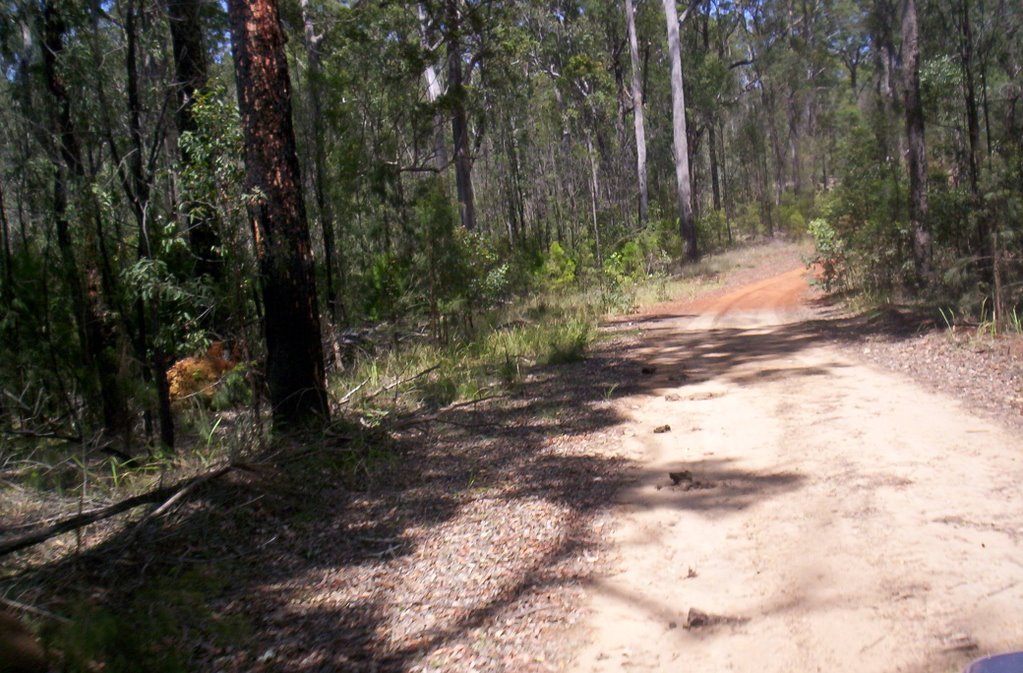
Members met at 7:30am for the two hour trip to Kroombit Tops National Park. Those who owned 4WD vehicles offered spare seats to other members as the track can be rough and muddy.


A brief stop at around 9:30am to meet up with other members who had camped overnight, and we were off again to the site of the 'Beautiful Betsy' crash. This took about 2 hours and soil and vegetation changed quite dramatically at times.


At the crash site, there was excellent signage, and a surprising amount of wreckage scattered around.


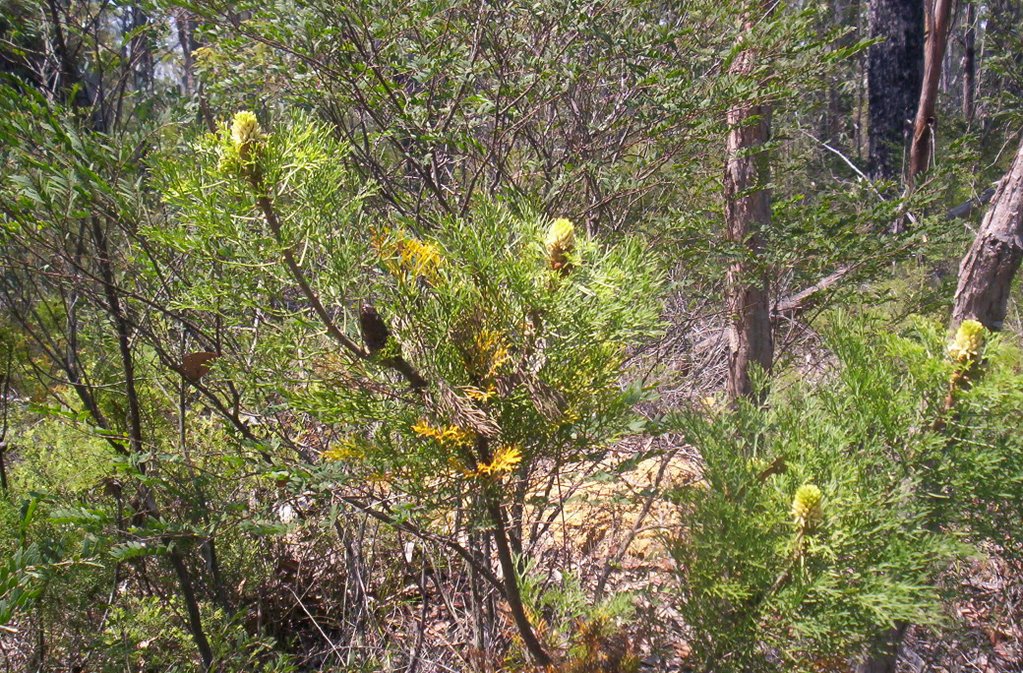
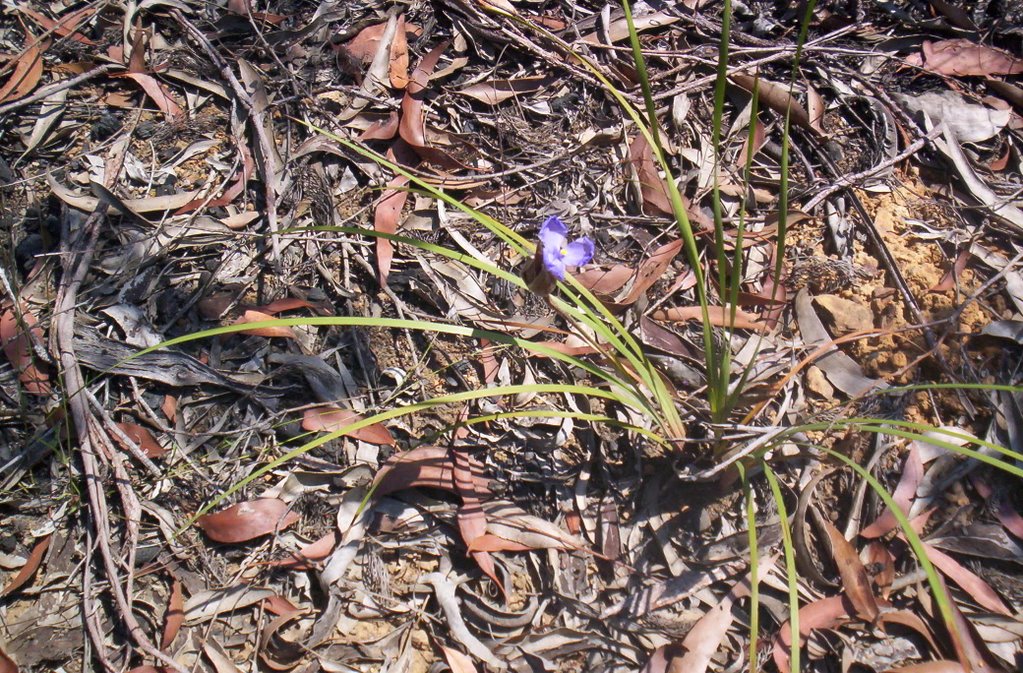
After lunch, members stopped at a heath community and identified a number of plants.


Tomas found some interesting leaves!


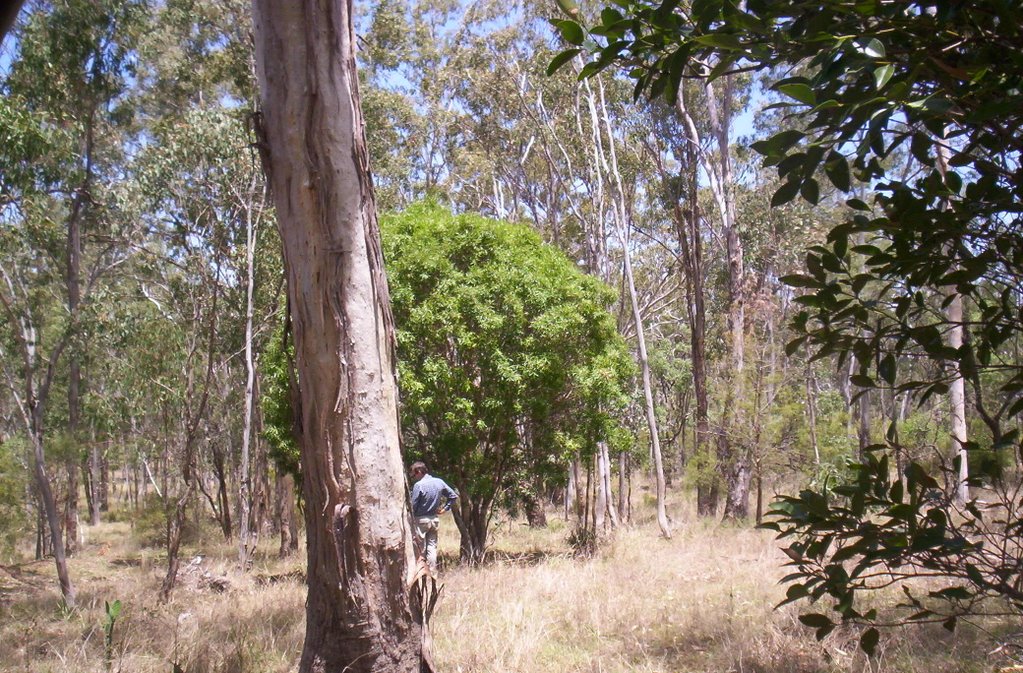
This pretty little tree is OLACEAE Notelaea microcarpa


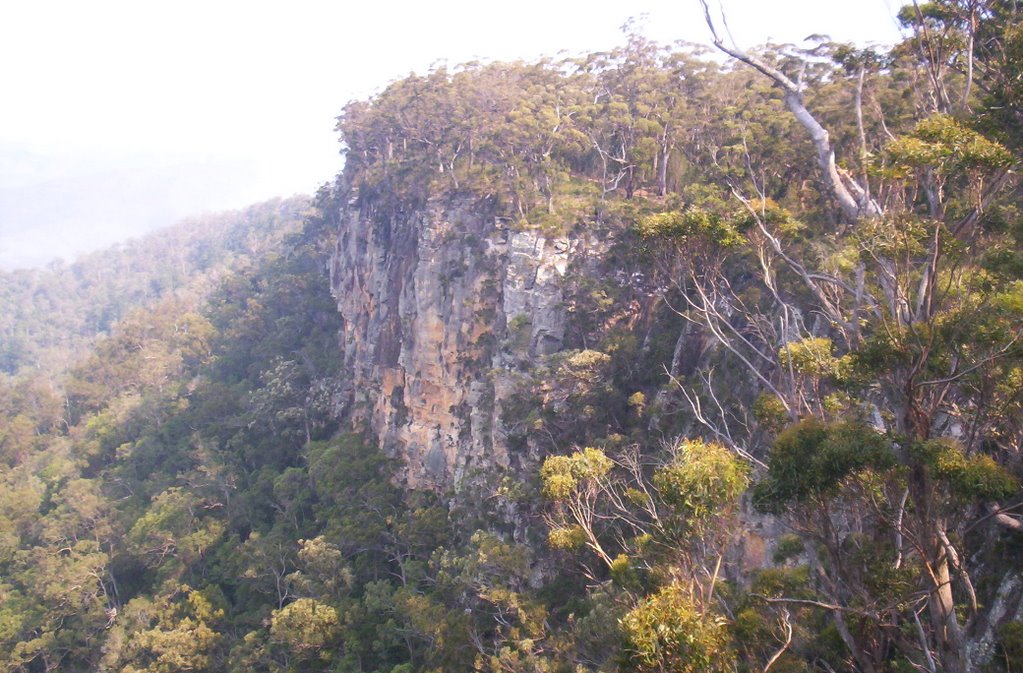
After a long hot and dusty drive, members were glad of the cool breeze, amazing view and afternoon tea at the Kroombit lookout.


Tuesday, November 07, 2006

NEW address for Gumnuts

The ASGAP 'Gumnuts' site has changed web address.
Find it now at http://www.blognow.com.au/gumnuts

Wednesday, August 30, 2006

Best practice guidelines for urban and home garden irrigation
The Water Services Association of Australia and Irrigation Association of Australia have funded the development of best practice guidelines for urban and home garden irrigation. For further information visit http://www.irrigation.org.au/standards.html#qi_stds_03
Brisbane Flower Show:
Members & Friends,
It might surprise you but there were more than 50 flowering varities of natives around Gladstone, on Council and Port Authority land, I sent about 40 different specimens down for the flower show. Pity I couldn't have some help from other sgaps. I spent from 12-30 till 7-30 pm when I put the two cartons on the bus for Brisbane. Hope you enjoy the photo sent by Lorna. I can't print it out in color, but some of you may like to do so for your albums.
Regards
Ruth Crosson

Wednesday, August 16, 2006

Australian Landscape Conference 10th – 11th September 2005

A Gardener’s Response

This was the sixth international landscape and garden design conference held in Melbourne and I was lucky enough to be given a registration. I imagined it would be seriously landscape oriented and landscaper attend but the lure of international and Australian speakers talking about garden design and their “Creative processes for design excellence” I knew would be relevant.

The International speaker lineup was an excellent as it was varied and the all made reference to their creative processes (early horticultural experiences, study, climate, soil and site analysis and plant selection decisions) in their first lecture and their second focused on their applications in their work. Their own illustrative slides and audio selections were delightful.

I have quoted information from the conference brochure which I found made such sense after the event! Penelope Hobhouse spoke first on “Training the Eye: the art of garden design”. She told of her early gardening, her writings and her more recent research in gardening history, garden styles and discovery of Persian oasis gardens. One of her earliest books was about colour in the garden and she confesses now she’s far more charmed by simplifying and reducing decorative planting. Her second lecture on “Nature and Art in the Garden” and led to her expounding on her new love of open paved areas, subtle water features and structural tree planting. She spoke of our gardens being our attempts to make paradise on earth and that these would be the paradise we would find eventually. Not being involved in that line of thinking I was rather fearful of the prospect!

From the US was Rick Darke, described as “a design consultant, author and photographer focused on landscape design, restoration, planning and ‘enhancement’. His lecture was titled “Creating the Livable Landscape: and ethic for ecological gardening” and “The Woodland Garden: capturing the spirit of the forest”. Both were superbly illustrated and beautifully depictive of north-eastern US in all seasons, both his personal garden and the woodlands and gardens in that area. I felt his major message was to open our eye, to view things differently, to seek out subtlety and to leave only a gentle impression of our existence.

James Hitchmough, a Professor in the Department of Landscape in the University of Sheffield has spent several years in Melbourne as a lecturer at Burnley Collage before returning to the UK. His topics were “Values and Meanings in our Gardens: The great debate” and Glamour in the Garden: naturalistic herbaceous plants communities”. I’m not sure about “glamour” but he spoke amusingly and realistically about establishing plants communities and planting failures. His current work is in naturalistic herbaceous vegetation, planting green meadows with a mix of native and compatible wild grasses and flowers. His suggestion for “meadow” planting in Australia gave an example using Kangaroo Grass (Themeda australis) a great favourite of his; teamed with hot pokers kniphofia spp, a non invasive agapanthus and a daisy form (I’m a bit vague here). He was adamant that Echinacea spp in Australian paddock conditions would be a dud, said with a Sheffield accent rhyming with wood! It seemed to me that there was a lot of time through winter and early spring that these British meadows were not at their best but that in Australia we had much better prospects for year round satisfaction.

Christopher Bradley-Hole, also from the UK, trained and worked as an architect before “his fascination for plants and gardens led him to refocus on the broader landscape”. His lecture was titled “The Urban Garden: Crafting a modern style” with examples of his Chelsea Flower Show entries displaying “pared down simplicity….executed with a sharp eye for both rigorous design and harmonious planting” and “The Wider Landscape country gardens and public landscapes”. He described his architectural visions inspired by mathematical perfection, the rectangular blocks of colour in the Mondrian style are and Fibonacci series which he then interprets in bare stonework or exuberantly plants with perennials and grasses. His problems-solving techniques with moving people through his landscape were impressive.

The last international landscaper was Juan Grimm from Chile who, apart from suffering from the flu, was any thing but grim. His presentations were titled “The Landscape of Chile: a vision of nature and for design” where he introduced us to the broad range of areas and their natural landscape across the length of Chile, and “Garden Design in Chile: challenges and opportunities where he showed us many of his fabulous private and public design works. They were indeed brilliantly related to the landscape and made great use of the indigenous vegetation teamed with exotics that would support and mould to the forces of nature in a similar way. He loved showing us Puya chilensis a grey/green leafed bromeliad that stars along the northern and central coastline, a great favourite of his. I would recommend members seek out his book. Most of the gardens we saw were large (one was 32 acres!) and impressive but were never tasteless extravaganzas.

A landscaper originally from Czechoslovakia but now designed in Sydney is Vladimir Sitta, Who spoke on “Exploring the Edge: does our construction ability intimidate our ideas”. He was wonderfully disrespectful and outrageous and says he “does not see the private garden as a place of naked confrontation and dispute with nature…..unlike out public landscapes with concepts homogenised to pulp by public authorities, bean counters, conspiracy lawyers and oh, so inspiring, public consultation”. That quote sums him up delightfully. He feels “private gardens retain the highly individualistic and specific character”. His certainly do! Thinking black caned bamboo, pebble surfaces and shallow black marble pools, or fabulous arrangements of cacti, succulents and grasses in angular coloured walls and you have some idea of the scope of his designs.

From New Zealand came Robert Watson, a lawyer who turned to landscaping and is based in Christchurch. “He does private, commercial, tourist, urban and rural design projects” and he had wonderful slides to show some of variety of his work. His lecture titled “New Directions from New Zealand” showed us some of his work like small courtyard gardens, City gardens and sweeping landscape patterns on the Canterbury plains. One of these, now 10 years old, was planted to wrap the proposed house and surrounding garden from the diving winds. It still is without a house even though the shelter-belt is well established. This, or another there, is planted only with native or New Zealand bred plants in astounding foliage and growth habit patterns.

The delightful Professor George Seddon, a Senior Research fellow at the centre for studies of Australian Literature, University of WA spoke on “Adapting our Gardens to our Environment”. His theory on successful gardening is to not choose a plant and then attempt to provide the conditions for it to survive. “This is the wrong way around and we should accept what our environment offers, then make our plant and design choices accordingly. This was the material of his scholarly lecture and we all need these reminders! For those how saw gardening Australia on 8th October 2005 you had the combined delight of meeting this thoughtful person and viewing his delightful Mediterranean garden where he has put his design and ecological principles into practice.

Kate Cullity, a landscape architect from WA spoke on “Working with the Poetics of the Australian Landscape”. She works with a team which “undertake investigations into the poetic expression of the Australian landscape” but as this is mostly what the GDSG is all about it was a bit waffly for me. The work involves installations and designs to represent/make people notice/draw attention to the beauty of our Natural Landscape.

Professor Jim Sinatra and Phin Murphy delivered a dual address titled “Art, Sculpture and the Landscape”. “Their creative process includes ‘landscape paintings’ which developed from working with inspiring landscapes and indigenous people.” They seem to experiment with form and shapes and apply these to the landscape in forms like the giant banners and “Tracky Dacks” that march across featureless new subdivisions or moulded reflective pillars in the park – amusing and light-hearted designs.

Andrew Laidlaw is the landscape architect for the RBG Melbourne. He was an inspired and inspiring speaker but I will quote the brochure entirely for this summary of his work and the illustrations he showed. “He we principal designer for the Perennial Border, Species Rose Garden, Water Conservation Garden, Long Island (RBG) Indigenous Garden, Two stands at the international Flower and Garden Show (2 gold medals) and the New Children’s Garden. He consulted with co-workers in the gardens for their input in his designs.

All of these speakers were brought together through the efforts of Warwick and Sue Forge and the audience and the speakers were adeptly controlled by John Patrick. They presented a varied but cohesive and entertaining event. Inspiration came from the consistent call to use materials suited to the site, to look anew at arrangements, ecological considerations, colour and planting possibilities and to experiment with combinations of native and like minded exotics.

They had also arranged a Pre-conference Design Garden Tour for the Friday when delegates toured 6 gardens and had a chance to talk with most of the owners. I was not able to tour but heard reports of it being a great success.

The event was definitely not heavily loaded to the professional and there were many “home gardens” among the audience seeking new ideas. It cost were approximately $500 per person, accommodation of course extra, but very much worth the effort. The tour was $95 for the day. There was a lot to dream about and to ponder. Reality hit when I returned to my personal, small, still working up to paradise, suburban lot with plantings a mix of natives, flowers for cutting and organic vegetables. I enjoy the efforts and the changes I have to make and the economies I have to apply but I was overwhelmed by the thought of all thousand of dollars that have been spent in making extravagant paradises for those who had the resources. Perhaps some of those resources could be funneled off to planting plans for needy countries.

Caroline Gunter.

Thursday, July 06, 2006

The White Cedar Tree

Association of Societies for Growing Australian Plants
Garden Design Study Group
Newsletter No. 52
November 2005
Leigh Murray NSW

White Cedar is ideal for car parks because of its umbrella shape. Please use local source plants, not the common plant grown that is Indian or Chinese in origin. The local plant appears to have smaller fruit, and so attractive to local birds. Importantly, the White Cedar should not be mulched around as this allows the leaf striping caterpillar to attack it. The caterpillar lives in mulch during the day and eats the leaves at night. I have watched the tree next to the Newcastle Museum and they are not mulched and the caterpillars do not seem to be able to survive to attack them (but I haven’t been in there this year, so a check wouldn’t hurt). Therefore if you grow White Cedar, have bare earth around them. They perform very well in the hot dry situation that car parks provide. Councils may worry about the fruits of the White Cedar may attract birds the will crap on the cars in the car park. However White Cedar fruits ripen when there are not leaves on the trees, which means the birds don’t hang around the trees but eat their fill and go and sit somewhere safer. Also the fruit are rather large, so the birds can’t eat many anyway, and have to move on. The tree is using the old gambit “don’t put your fruits all in the one bird” as that bird may get eaten and they never know where the seeds will end up!


By Ruth Crosson

This method was tried by past member Dawn, who said it was successful. Tie a piece of Hessian sack around the trunk of the White Cedar; turn down the collar using the top portion of the sack. Caterpillars crawl up the trunk, getting under the collar and can’t proceed, being trapped. Every morning Dawn would squash the Hessian collar, and so kill the caterpillars. Caterpillars need to eat, like every thing else. They are also part of the food chain and in turn feed birds that visit the trees by day and nocturnal animals which are also protein feeders, eating caterpillars and insects. Possums in your garden are a natural control, they may eat your roses and fruit, but they also eliminate other pests. Butterflies and moths are pollinators, No pollination no seeds. No seeds no trees, caterpillars, butterflies, moths, birds, nocturnal animals, lizards and frogs. The trees and foliage are dependent upon your actions; think before you load up your garden sprayer with poisons, you could be destroying a lot more than you think.

Friday, March 31, 2006

Lenore Lindsay's Radio Talk no. 3
(reproduced with Lenore's permission)
Topic: Myths about Native Plants, favourite shrubs

Good morning listeners. Lenore Lindsay from the Society for Growing Australian Plants here again.

Don’t forget our meetings are held on the fourth Friday of every month at 7.30am in the administration block of the Frenchville State School, and our organized outings are held on the first Sunday. These can be full or half days, so listen for the community announcements or ring 49283699 or 49282862 for information.

Today I think it’s about time we debunked some of the myths that are still doing the rounds about Australian plants. If you believe or act on any of these you’ll be disappointed with your garden, and that would be a terrible shame, as native plants can be so rewarding.

Old wives’ (or old husbands’) tale number one is that Australian natives are no maintenance. Wrong! They’re plants – living organisms with needs like any other life-form. The secret to gardening successfully is careful selection of plants, so that those with similar requirements are grouped together, and you aren’t going to end up a few years down the track with inappropriate plants in unsuitable positions, such as a big gum tree close to your house.

If you aren’t prepared to put a bit of extra time into your garden, don’t choose plants that need extra care, no matter where they come from. Consider something like one of the new Lomandra cultivars such as Tanika, which only needs cutting back to near ground level every 5 years or so to maintain its lovely architectural shape. Time spent in careful selection in the beginning will save you time and money (and frustration) later on.

Fairy tale number 2 is that you shouldn’t prune natives. Rubbish! Pruning is as necessary for a good looking native garden as for any other, and virtually the same general guidelines apply. The best time to cut is after flowering, and remove up to a third of the growth. Prune to even up the plant shape, or to shape for hedges or classic topiary. Native Rosemary or Westringia has a really attractive dense growth when pruned regularly, as do some of the Lillipillies and figs, and lots of others. Pruning prevents plants becoming leggy, helps them look lush and keeps them contained so that they fit into a garden with a variety of plants that all look healthy and happy.

Fallacy number 3 is that Australian natives don’t need watering. If you want a no-water native garden, then you need to choose only indigenous plants. That is, plants that occur naturally in your area, or at least, plants from areas with similar climate. If you have a garden with a collection of plants with different water requirements, supplementary watering is essential. Remember to group like needs together, and that one deep watering is better than half a dozen superficial ones.

Myth 4 is that you shouldn’t feed Australian plants. The truth is that they don’t like chemical fertilizers that are high in phosphorous, but they do like to be fed. Spring and Autumn are best times. Use either a specially formulated Australian native plant food, or an organic based fertilizer such as blood and bone or pelletised animal manure. Follow the directions – more is not always better. Quite the opposite in fact!

And here’s a true story to restore your confidence: Australian natives, like all plants, need to be mulched. This conserves water, suppresses weeds, cools the root system, and if you use an organic mulch, it improves the soil as it breaks down. If you don’t want to keep replacing an organic mulch, are creating a particular style, or live in a bushfire area, you might prefer to use inorganic mulch such as gravel, pebbles or river stones.

So, whether you want an all-native garden or a mixed native/exotic one, forget the fairy tales from the seventies, and remember the golden rule for successful gardening – careful plant selection and pruning, and appropriate fertilizer, watering and mulching – and you’ll have a garden to be proud of.

Now, what about your plant choices. In previous segments I’ve had a quick look at ground covers, including vines and spiky or grass-leaved plants, and accent subjects for hanging baskets, so I thought maybe this week I’d finish with a bit of a discussion on a couple of my favourite shrubs.

The first is the Beach Cherry, Eugenia reinwardtiana. There are wonderful examples growing in the Kershaw Gardens. This is a lovely rounded and compact shrub with glossy green leaves, red new growth, small white flowers, and bright red shiny fruit which taste delicious. While they usually have a single seed, in some really large fruits it can be divided into 2 or more segments. These seeds are easy to germinate, though they can take a month or two to come up. You only need to see the seedlings under the shrubs at the Kershaw to realize this. While this plant is slow growing, it usually flowers within the first couple of years. It needs well drained soil, and often responds well to a dressing of lime or gypsum. It’s hardy, and will withstand salt winds, so is good for a coastal garden. In this harsher situation, the leaves may be more leathery. It can also tolerate light frosts. It is equally at home as an understory plant, but fruits best in semi-shade to full sun. It’s great next to a path or edge, or as a container plant. Definitely on the list of favourites!

Another on my personal list is the Scarlet Fuschia, Graptophyllum excelsum. Again, there’s some great examples down at the Kershaw Gardens, edging the path from the Highway carpark. This is another hardy compact shrub with shiny dark green leaves and vivid red tubular flowers. It makes a great screen or hedge, tub plant, specimen shrub or part of a mixed planting. In really hot dry conditions it will need semi-shade, but in humid coastal areas or temperate climate it can be planted in full sun. It needs good drainage, and responds well to lime. This is Rockhampton’s Native Shrub emblem, and is rare and endangered in the wild. So if you plant this, you’ll be doing your bit to help its survival. Fortunately it’s becoming established in cultivation, and is available at a number of local nurseries.

And lucky last for today is the Cat’s Whiskers, botanical name, Orthosiphon aristartus. This is a hardy and extremely versatile small shrub, suitable for all but very cold areas. It can be grown in sun or shade, but has a fairly high water requirement in full sun. Its big advantage is that it flowers in full shade. The flowers are spectacular long terminal spikes, with long stamens that give it its common name. There are 2 colour forms – white and mauve, but the mauve is less hardy and more cold sensitive. It grows quickly, and can easily become leggy, so prune heavily after flowering to keep it looking good. This means it will also need regular fertilizing. It grows quickly and easily from cuttings, and it’s a good idea to keep a few “on the go” and renew your plants every so often if they become tired or too woody. This is a shrub that can be integrated into all types of gardens, even a cottage-type flower garden, and makes a wonderful understory planting. It has the bonus of cut flowers as well.

So, that’s all for today. Happy gardening till next time.